Have you ever noticed how spring has a way of stirring up an urge inside of us? Suddenly, we’re craving longer walks, fresher meals, earlier mornings, and a clear-headed, energized version of yourself. But if you’ve ever tried to force that “new season, new me” energy without actually feeling it, you know how quickly motivation can fall flat.
That’s because true momentum doesn’t start with discipline but rather within your body and more specifically, in your gut.
When your digestive health is dialed, and digestion is working with you (not against you), energy feels steadier, movement feels easier, and that elusive “flow state” becomes something you can actually tap into. Here’s how digestion fuels your energy, movement, and momentum (and how to support it this spring).
Digestive Health: The Gut-Energy Connection

Energy doesn’t just come from what you eat. It comes from what your body can actually absorb and use. Even the most nutrient-dense meals won’t do much if your digestive system isn’t breaking them down efficiently.
Your gut is responsible for converting food into usable fuel, such as amino acids, fatty acids, glucose, vitamins, and minerals. These nutrients power everything from cellular energy production to brain function. When digestion is sluggish or compromised, the conversion process becomes less efficient, leaving you feeling fatigued, foggy, or unmotivated.
On the other hand, when digestion is supported, energy tends to feel more stable and sustained. Instead of spikes and crashes, you get a smoother, more consistent flow—exactly what your body needs to move through the day with ease.
How Your Gut Powers Movement
However, movement isn’t just about discipline. It’s also about how your body feels. And your gut plays a significant role in that.
Poor digestion can lead to bloating, discomfort, and inflammation, all of which can make movement feel heavy or even discouraging. When your gut is out of balance, your body may feel more fatigued, stiffer, or resistant to exercise.
When your digestion is in a good place, movement tends to feel lighter and more intuitive. You’re less weighed down by discomfort, and your body can direct more energy toward physical activity rather than managing internal stress.
There’s also a gut-muscle connection at play. Nutrient absorption supports muscle repair, electrolyte balance, and hydration, all of which are essential for endurance and recovery. In other words, when your gut is supported, your workouts (and even your daily walks) feel more fluid and sustainable.
Momentum Starts in the Gut-Brain Axis
That sense of “flow”, where you feel focused, motivated, and in sync, doesn’t just come from willpower. It’s deeply tied to the gut-brain axis, the communication network between your digestive system and your brain.
Your gut produces and regulates key neurotransmitters, such as serotonin and dopamine, which influence mood, motivation, and mental clarity. When your gut microbiome is balanced, these signals tend to be more stable, helping you feel calm, focused, and energized.
But when digestion is off, whether due to stress, poor diet, or lifestyle factors, that communication can become disrupted. The result? Brain fog, low motivation, and that “stuck” feeling that makes it hard to build momentum.
Supporting your gut can help smooth out those fluctuations, making it easier to tap into a steady, productive rhythm.
How to Support Digestion for a Spring Reset
If you’re looking to step into spring with more energy and ease, small, consistent shifts can make a big difference:
Prioritize whole, fiber-rich foods
Eating a balanced diet consisting of fruit, vegetables, legumes, lean proteins, and whole grains can help feed beneficial gut bacteria and support regular digestion. A diverse range of these foods can help promote a more resilient gut microbiome, which is closely linked to better energy and overall well-being.
Stay hydrated
Water plays a key role in breaking down food, keeping things moving efficiently, supporting nutrient absorption, and preventing digestive issues like bloating and constipation. Even mild dehydration can slow digestion and leave you feeling sluggish, so aim to sip consistently throughout the day (11.5 cups per day for women and 15.5 cups per day for men, according to the Academy of Nutrition and Dietetics)
Incorporate digestive support
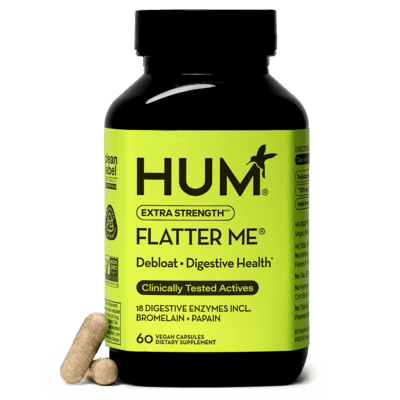
If you’re looking for additional digestive support, supplemental aids like HUMs Flatter Me Fiber utilize digestive enzymes to break down proteins, carbs, fats, and fiber. As a result, this promotes regularity, reduces bloating, and overall nourishes the “good” gut bacteria that our bodies need to function.
Slow down while eating
Eating in a relaxed state is another way to support better digestion by activating your parasympathetic (“rest and digest”) response. When you slow down, chew thoroughly, and stay present with your meal, your body is better able to release digestive enzymes and properly break down food. Over time, this can help reduce bloating, improve nutrient absorption, and leave you feeling more satisfied and energized after eating.
Manage stress levels
Chronic stress can negatively impact gut health, so incorporating practices like walking, stretching, and meditating into your daily routine can go a long way. Even a few minutes of slowing down each day can help regulate your nervous system, which in turn supports more consistent, efficient digestion.
Spring flow isn’t just about doing more, but instead feeling aligned enough to move forward with ease, and that starts in the gut.
When your digestion is supported, your body can create energy more efficiently, your movement feels more natural, and your mind is better equipped to stay focused and motivated. Instead of forcing momentum, you allow it to build organically, one well-supported system at a time.