
These days, modern wellness routines can look a little less like self-care and more like a science experiment. Case in point: the rise of peptides.
Peptides are increasingly in the cultural conversation. First there was the GLP-1 boom, which is still going strong as the drugs become more accessible and advanced. Soon after, other peptides migrated from biohacking circles to the broader population, promising a quick fix for pretty much any wellness concern under the sun: weight, inflammation, skin health, gut function, muscle growth, you name it. While many of the peptides in the conversation aren’t FDA–approved or even clinically researched in humans, devotees can’t get enough of them.
Peptide stacking—i.e., combining peptides to personalize your results—is becoming more mainstream, and it seems that it’ll only grow in popularity. In March, Health Secretary RFK Jr. voiced his interest in lifting the FDA ban on a dozen-plus peptides, which would give the green light to compounding pharmacies to make and sell them. Nonetheless, that’s not stopping people from getting their hands on their own stacks, whether through early-adopting medical professionals or online marketplaces.
We asked a few professionals in the space what their own peptide stacks look like, what their results are, and what you should know before exploring peptides for yourself.
3 People on What Their Peptide Stack is and Why
Purvisha Patel, MD
Purvisha Patel, MD, a dermatologist and Mohs surgeon at Advanced Dermatology & Skin Cancer Associates in Memphis, Tennessee, takes the KLOW stack:
- BPC-157: focuses on tissue repair (tendons, ligaments, gut lining)
- TB-500: promotes systemic recovery and new blood vessel formation
- GHK-Cu: supports collagen synthesis, skin renewal, and tissue generation
- KPV: targets inflammation and supports immune health
Results: She’s been taking her peptide stack for a year and says she’s never felt better in her life. She pairs them alongside other healthy habits—including daily workouts, following a well-rounded diet, and getting regular skin treatments to stimulate collagen. Altogether, “I am maximizing my efforts to stay young and active,” she says.
FYIs: Dr. Patel reminds us that most peptides haven’t been cleared for compounding, and emphasizes that sourcing isn’t regulated. She also takes her peptides sublingually (i.e., administered under the tongue). “Though its absorption isn’t as good as injectables, it is less likely to be contaminated and cause harm,” she says.
To further optimize safety, she advises consulting a physician before starting any peptide regimen, as well as getting a thorough cancer screening beforehand. “Peptides do not discriminate between what cells they support and encourage, including cancer cells,” she cautions.
Kiara DeWitt, BSN, RN, CPN
Kiara Dewitt, a registered nurse, accredited master nurse injector, and CEO at InjectCo, includes the following in her peptide stack:
- Low-dose sermorelin: support for recovery, sleep quality, and energy
- GHK-Cu: for skin quality and hair density
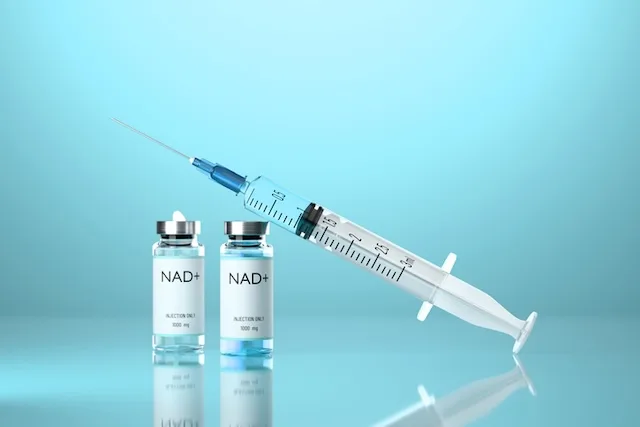
- NAD+: not a peptide, but a coenzyme that boosts cellular energy and focus
Results: Dewitt started peptide therapy with sermorelin 14 months ago and slowly added the others since. She says that she has more steady energy throughout the day, better sleep efficiency, and about a 20 percent improvement in skin texture and tightness.
FYIs: Positive results aside, she notes a few caveats—including occasional injection site soreness with sermorelin, an adjustment period to get used to the flushing feeling from NAD+, and high price tags. She says she spends anywhere from $250 to $600 a month on her stack, which she gets through reputable 503A compounding pharmacies (which compound medications that are patient-specific and not produced in bulk).
If you’re peptide-curious, Dewitt has a few pieces of advice. “Prior to starting, make sure you work with a licensed medical provider who will order you baseline labs (including CBC, CMP, IGF 1, inflammatory markers, etc.),” she says. She also advises steering clear of suspect websites. “Sites that sell for $40 a vial are extremely risky when it comes to contamination and dosing accuracy,” she warns.
Michael Zachman
Michael Zachman, owner of Madison Meds, an online telehealth company that distributes peptides via 503a and 503b pharmacy partners, has the following in his peptide stack:
- Low dose of tirzepatide: to maintain weight and control blood sugar and cholesterol levels
- GHK-Cu, BP-157, and TB-500: for anti-aging, recovery, and gut health
Results: “My experience using the stack has been amazing,” Zachman shares. “Over the course of the last three months, I’ve noticed that my skin has cleared. I also noticed that after workouts I’m becoming less sore and achy. I’m 42 years old, so anything helps at this point.”
FYIs: Zachman notes that it’s historically been difficult to access peptides through a licensed medical provider—not to mention cost-prohibitive for many. “Unfortunately, some individuals purchase these peptides from the gray area market and do not know what they are actually getting,” he warns (which is what inspired him to start his own company).
The Takeaway on Peptide Stacks
Some people swear by their peptide stacks, saying that the results have been life-changing (or positive at the very least). That said, these reports are anecdotal, and there’s a lot that needs to be done to properly vet the majority of peptides for safety and efficacy. If you’re interested in creating a peptide stack for yourself, know that risks do exist, so be sure to proceed under the care of a medical professional.